Termite Inspections Brisbane Northside & Moreton Bay
Visual termite inspections of accessible areas, with photo-backed reporting and practical recommendations. Carried out by a licensed pest control operator across Brisbane Northside and Moreton Bay.
What Is a Termite Inspection?
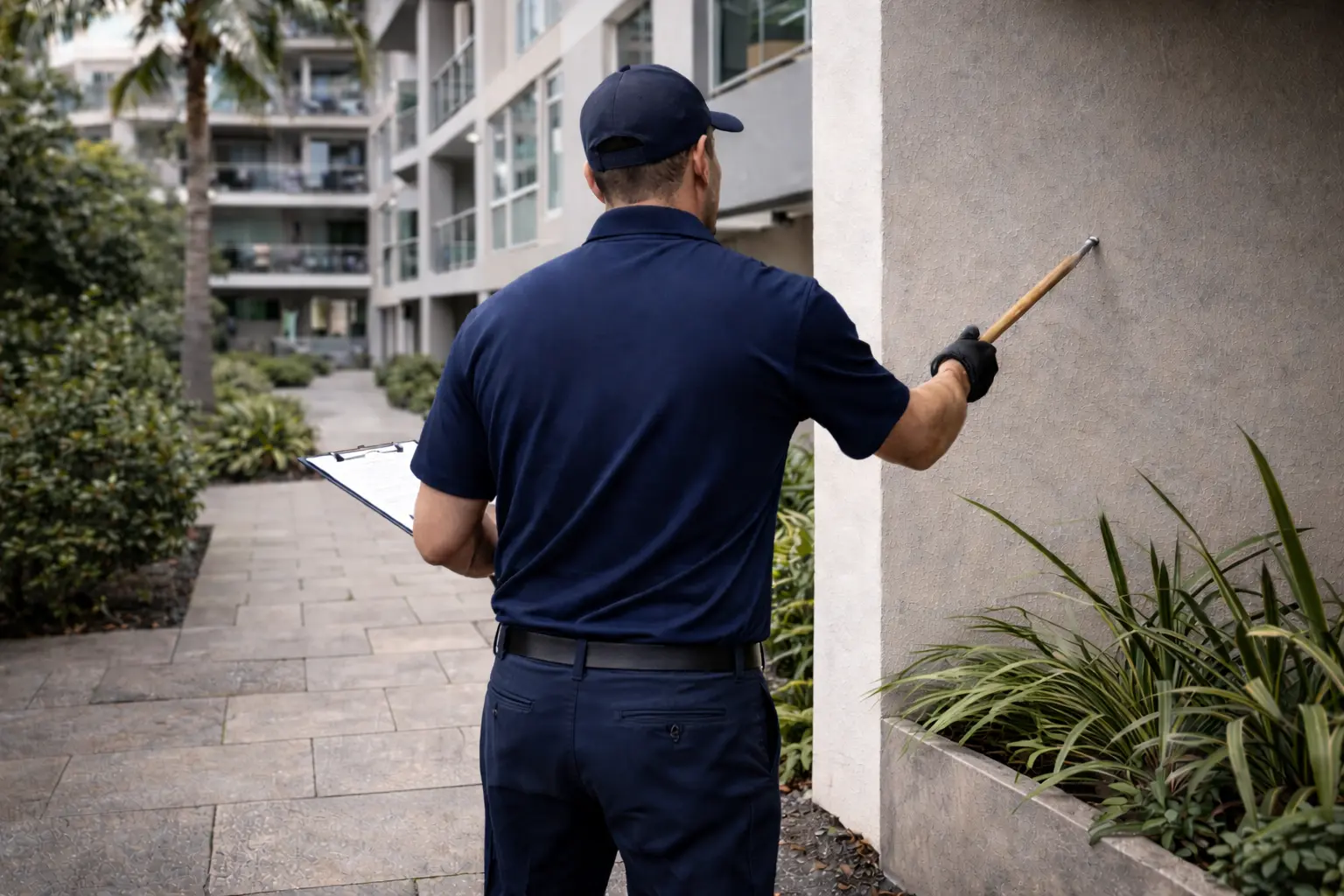
A termite inspection is a visual, non-invasive inspection of the accessible areas of a property. The purpose is to identify evidence of termite activity, termite damage, conducive conditions and moisture issues that may increase the risk of termite attack.
Inspections are carried out in accordance with Australian Standard AS 3660.2 — Termite Management: In and Around Existing Buildings and Structures. The standard sets out the minimum requirements for the conduct of termite inspections, including the areas to be inspected and the content of inspection reports.
Termite inspections are visual and non-invasive. They cover accessible areas only — concealed areas such as wall cavities, areas under concrete slabs and enclosed roof spaces cannot be assessed without further investigation. A clear inspection report does not guarantee the absence of termites in inaccessible areas.
Inspection Overview
- Visual, non-invasive inspection
- Residential & body corporate
- Commercial properties
- Licensed & insured operator
- Written report with photos
- Annual inspections recommended
Call to book or enquire
Areas Inspected
The following areas are inspected where visible and accessible. Access limitations will be noted in the inspection report.
Subfloor areas
Where accessible — bearers, joists, piers and ground contact timber.
Roof void
Where accessible — rafters, ceiling joists and roof framing.
Internal areas
Skirting boards, door frames, window frames, built-in joinery and flooring.
External areas
Cladding, fascia, eaves, weep holes, slab edges and external timber.
Garden beds & landscaping
Garden beds against walls, timber retaining walls and mulch adjacent to the structure.
Moisture & conducive conditions
Leaking pipes, poor drainage, condensation and other conditions that attract termites.
Areas Not Covered by a Visual Inspection
The following areas cannot be assessed during a standard visual inspection:
- Concealed areas behind walls, under concrete or within enclosed cavities
- Areas that are inaccessible or unsafe to enter
- Furniture, stored goods or personal belongings
- Areas blocked by stored items or obstructions
Clear, Photo-Backed Inspection Reports
Following every inspection, you receive a written report documenting the findings from all inspected areas. Reports include photo-backed documentation of any concerns identified, assessment of conducive conditions and practical recommendations.
Our reports are written in plain language and structured to be easy to understand. Where termite activity or significant risk is identified, we will discuss the findings with you and explain the options available.
- Written findings for all inspected areas
- Photo-backed documentation of any concerns identified
- Assessment of conducive conditions and moisture issues
- Practical recommendations for any findings
- Advice on termite management options where relevant
- Clear summary of areas inspected and any limitations

Annual Inspections Are Recommended
Australian Standard AS 3660.2 recommends termite inspections at least every 12 months. In higher-risk situations, more frequent inspections may be appropriate.
Early Detection
Termites can cause significant structural damage before becoming visible. Regular inspections allow early detection before damage becomes extensive.
Conducive Conditions
Regular inspections identify moisture issues, drainage problems and other conducive conditions that increase termite risk — allowing you to address them early.
Ongoing Peace of Mind
An annual inspection program provides ongoing assurance that your property is being monitored by a licensed professional.
Insurance & Property Value
Documented inspection history demonstrates due diligence and can be relevant to insurance claims and property transactions.
Body Corporate Termite Inspections
We provide annual termite inspection programs for body corporate common property areas, including clear written reporting structured for committee records and maintenance registers.
We understand body corporate access requirements, resident communication and the need for professional, compliant reporting. We work with body corporate managers, committees and facilities managers to coordinate access and deliver a consistent annual inspection program.
Body Corporate ServicesBody Corporate Inspection Program Includes:
- Annual inspection of common property areas
- Written report with photo documentation
- Reporting suitable for committee records
- Coordination with body corporate manager
- Resident access communication support
- Practical recommendations for findings
Common Questions About Termite Inspections
Have a question not answered here? Call us or send an enquiry and we will get back to you promptly.
0447 590 962- How often should I have a termite inspection?
- Australian Standard AS 3660.2 recommends termite inspections at least every 12 months for most properties. Properties in high-risk areas, with previous termite activity, with conducive conditions such as moisture issues or timber in ground contact, or adjacent to bushland may benefit from more frequent inspections — every 6 months in some cases. We can advise on an appropriate inspection frequency for your property.
- What is the difference between a termite inspection and a pre-purchase inspection?
- A termite inspection is a visual inspection of accessible areas of an existing property, typically carried out as part of an ongoing maintenance program. A pre-purchase timber pest inspection is carried out prior to purchasing a property and is typically more comprehensive in scope, covering the full structure and providing a detailed written report suitable for property purchase decisions. Both are visual and non-invasive inspections of accessible areas.
- What happens if termites are found during an inspection?
- If termite activity or evidence of termites is identified during an inspection, we will document the findings with photos and provide a clear written report. We will discuss the findings with you and provide practical recommendations, which may include a termite management system, barrier installation or further investigation. We do not recommend disturbing active termite workings — this can cause termites to relocate and make management more difficult.
- Can termites be present even if none are found during an inspection?
- Yes. A termite inspection is a visual, non-invasive inspection of accessible areas only. Termites can be active in concealed areas — within wall cavities, under concrete slabs or in enclosed roof spaces — that cannot be assessed without further investigation. A clear inspection report does not guarantee the absence of termites in inaccessible areas. This is why regular inspections and ongoing monitoring are important.
- Do I need to prepare for a termite inspection?
- To allow the most thorough inspection possible, we recommend ensuring access to the subfloor (if applicable), roof void, all rooms and external areas. Clear stored items away from walls and subfloor access points where possible. We will advise on any specific preparation requirements when you book.
- What is a conducive condition?
- A conducive condition is anything that makes a property more attractive or accessible to termites. Common examples include moisture from leaking pipes or poor drainage, timber in direct ground contact, garden beds or mulch against the structure, inadequate subfloor ventilation, and previous termite damage. Identifying and addressing conducive conditions is an important part of termite risk management.
- Do you provide termite management systems after an inspection?
- Yes. Where termite activity or significant risk is identified, we can discuss termite management options including chemical barriers, physical barriers and monitoring station programs. We provide clear information on the options available and their suitability for your property. See our Termite Management page for more information.
Book a Termite Inspection Today
Call us directly or submit a quote request. We service Brisbane Northside and Moreton Bay.
0447 590 962